
Choosing the right Garbage Bags is less simple than comparing colors, prices, or roll counts. A thin kitchen bag may handle coffee grounds and vegetable peels well. It may fail when wet cardboard adds unexpected weight. In a warehouse, heavy-duty bags usually offer stronger seams and better puncture resistance. However, thicker plastic can cost more and create more material waste. There is no perfect option.
This guide examines common bag types, including high-density, low-density, recycled-content, compostable, drawstring, and contractor bags. Each type serves a different buying situation. High-density bags suit lightweight, dry waste. Low-density bags provide greater flexibility for sharp or bulky items. Compostable products require careful checking, since facilities do not all accept them. Labels matter. So do dimensions, capacity, thickness, closure style, and stated load limits.
Real purchasing decisions often reveal small problems. A bag may fit the bin but leave too little overhang for tying. A “large” bag may still split around a broken package. Buyers should test samples with their actual waste before placing large orders. Check the bottom seal, stretch, odor control, and storage conditions. Keep rolls away from heat and direct sunlight. Product claims should be supported by clear specifications and credible certification where relevant.
The best choice depends on waste type, handling frequency, workplace conditions, and budget. This article helps buyers compare performance honestly, without treating one material as universally superior.
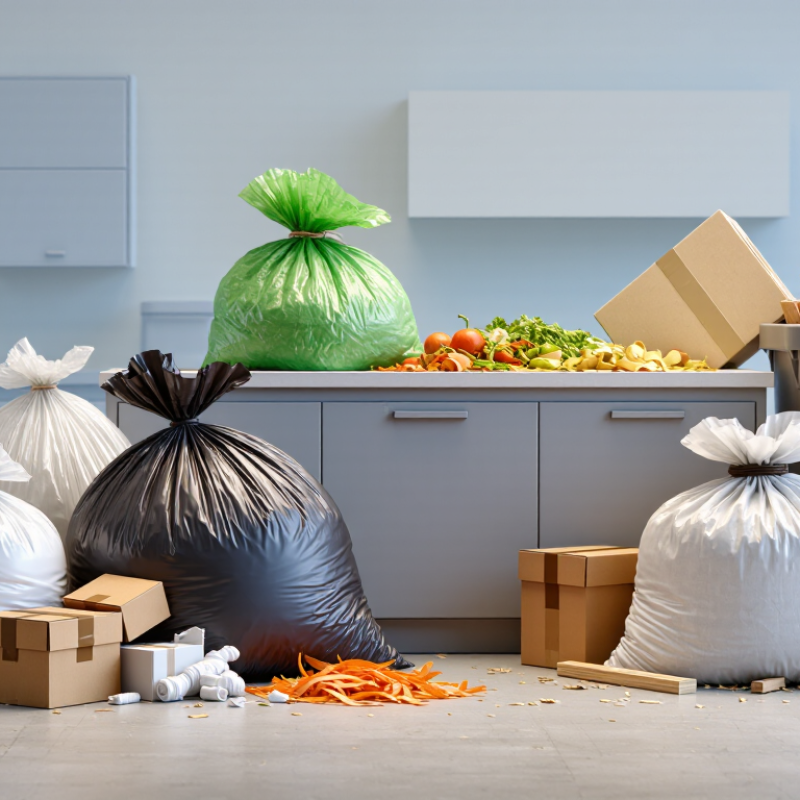
Garbage bags differ in material, thickness, closure, and intended use. Thin flat-top bags suit office bins, bedrooms, and dry paper waste. They are economical and easy to store. Drawstring bags work well in kitchens because their handles tighten around the rim. This reduces spills during removal. Small bags fit bathroom bins, while larger liners serve outdoor containers and busy commercial areas.
Heavy-duty bags are better for sharp packaging, wet waste, or dense loads. Their thicker plastic resists tearing, but extra strength does not make them puncture-proof. Use caution with broken objects. Clear bags help staff identify contents quickly, while colored bags support simple sorting systems. Recycled-content bags can reduce reliance on new plastic, although their quality varies by thickness and manufacturing standards. Compostable bags may suit certified organic-waste programs. They often fail in ordinary landfill conditions. Check local facilities first.
I once chose a bag by volume alone. It fit the bin but split under a heavy load. That small mistake taught me to check thickness and waste type together. Buyers should measure the bin, then add enough height for folding or tying. A snug fit is useful, yet an oversized liner can slip inward. There is no perfect bag. Practical selection depends on weight, moisture, handling, and disposal arrangements.
What Types of Garbage Bags Are Best for Buyers?
How to Choose the Right Garbage Bag Material
Choosing the right garbage bag starts with the waste, not the color or advertised thickness. High-density polyethylene bags are light, economical, and suitable for dry office waste. Their crisp texture works well with paper, packaging, and empty containers. They may tear when filled with sharp edges.
Low-density polyethylene bags feel softer and stretch more easily. They are often better for kitchen waste, damp materials, and irregular loads. I have found that a flexible bag can handle a crowded bin better than a thicker, rigid one. Still, flexibility cannot prevent punctures from broken bones or exposed cans.
Material thickness matters, but it is only one factor. A bag with a reinforced base can outperform a thicker bag with weak seams. Check the stated capacity, seal strength, and dimensions against your bin. A 60-liter bag may not fit a tall 60-liter container comfortably. Measure the rim.
Recycled-content bags can reduce demand for new plastic, although their strength varies by product and manufacturing quality. Compostable bags need careful attention. They usually require suitable organic waste and an accepted industrial composting facility. They should not be treated as ordinary plastic bags. I once assumed “compostable” meant harmless in every landfill; that assumption was wrong. For reliable daily use, match the material to the waste, test a small quantity, and inspect the seams before buying in bulk.
What Types of Garbage Bags Are Best for Buyers?
Choosing a garbage bag starts with matching its size to the container. A 10–13 gallon bag usually fits a household kitchen bin, while 30–33 gallon bags suit larger indoor cans. Outdoor bins may require 55 gallons or more, but dimensions matter more than volume labels. Measure the rim and height before buying. A loose bag wastes material. An undersized bag tears at the corners.
Thickness affects puncture resistance and handling. Light bags work for paper, tissues, and dry office waste. Medium bags are better for food scraps and heavier household rubbish. Heavy-duty bags suit wet waste, cans, or materials with rough edges. Thickness is often listed in mils, but the number alone can mislead. Plastic type, seams, and stretch also influence performance. I have seen a thick bag split because its seam carried uneven weight.
Load capacity should be treated as a practical estimate, not a guarantee. A bag filled with dense wet waste can become difficult to lift quickly. Distribute weight evenly and leave space for tying. For sharp objects, use a rigid container instead of relying on plastic. This protects handlers and reduces accidental spills. Buyers should compare bag dimensions, thickness, drawstring strength, and stated capacity together. A cheaper thin bag may cost more after repeated leaks. That calculation is easy to overlook.
Bag selection depends on volume, material thickness, and expected load. Small bags suit bathrooms and offices, while larger, thicker bags are better for kitchens, yard waste, and renovation debris. Load capacities are typical estimates and vary with bag material, shape, and how the waste is distributed.
What Types of Garbage Bags Are Best for Buyers?
Specialized bags make waste handling safer and more practical. Recycling bags should be clear, strong, and free from food residue. However, a bag does not make mixed waste recyclable. The World Bank’s What a Waste 2.0 report estimates that global municipal waste reached 2.01 billion tonnes annually, with at least 33% unmanaged. Clear separation at home still matters.
Compostable liners suit food scraps, but only where local facilities accept them. A certified liner may break down in an industrial composting system, yet it can remain intact in a backyard pile. Buyers should check certification details and collection rules. Plastic waste reached 353 million tonnes in 2019, while only 9% was recycled, according to the OECD’s Global Plastics Outlook. That figure challenges the idea that every “green” bag solves the problem. Hazardous waste needs greater care. Use compatible, leak-resistant bags only when local guidance permits them. Sharp objects, chemicals, and contaminated materials may require approved containers instead.
Tips: Match the bag to the waste stream. Check thickness, leak resistance, and capacity. Keep hazardous waste separate. Do not overfill. Store compost liners in a cool, dry place. Small mistakes happen, and labels can be confusing, so verify requirements with your municipal waste service.
| Bag Type | Common Material | Typical Capacity | Best For | Important Features | Recommended Disposal Route | Buyer Considerations |
|---|---|---|---|---|---|---|
| Recycling Collection Bags | Clear or translucent polyethylene; reusable woven bags may also be used | 13–33 gal (49–125 L) | Paper, cardboard, metal cans, glass, and accepted plastic containers | Easy content identification, moderate tear resistance, lightweight construction | Follow the local recycling program; many facilities require loose recyclables rather than bagged materials | Confirm local rules before purchasing colored or opaque bags, because some sorting facilities reject bagged recyclables |
| Certified Compostable Bags | Certified compostable bioplastics, such as plant-based or other compostable polymer blends | 2.6–13 gal (10–49 L) | Food scraps, coffee grounds, fruit and vegetable waste, and other accepted organics | Moisture resistance, odor reduction, certified compostability, easy removal from kitchen caddies | Commercial or municipal composting programs that accept certified compostable bags | Look for applicable certification, such as ASTM D6400 or EN 13432; “biodegradable” alone does not guarantee compostability |
| Paper Yard-Waste Bags | Multi-wall kraft paper, commonly made with recycled fiber content | 30–33 gal (114–125 L) | Leaves, grass clippings, small branches, and other dry yard waste | Rigid open-top structure, breathable material, suitable for curbside yard-waste collection in many areas | Municipal yard-waste or composting collection, where accepted | Keep the bag dry and avoid sharp branches or excessive moisture that may weaken the paper |
| Heavy-Duty Contractor Bags | Thick low-density polyethylene, often with gusseted sides | 33–55 gal (125–208 L) | Construction debris, bulky household waste, sharp-edged nonhazardous materials, and renovation cleanup | Higher puncture and tear resistance, strong seams, larger load capacity | Regular waste or construction-waste collection, subject to local requirements | Choose thickness and load rating according to debris type; these bags are not automatically suitable for hazardous waste |
| Hazardous-Waste Liner Bags | Heavy-gauge polyethylene or other material specified by the waste-management procedure | 20–55 gal (76–208 L) | Contaminated non-sharp materials, laboratory cleanup materials, and regulated waste where an approved liner is permitted | Leak resistance, puncture resistance, secure closure, and clearly defined compatibility requirements | Authorized hazardous-waste or regulated-waste treatment and disposal channels | Verify chemical compatibility and applicable regulations; never mix incompatible chemicals or use ordinary bags for regulated waste |
| Biohazard Waste Bags | Durable polyethylene with regulated color-coding and biohazard marking where required | 8–55 gal (30–208 L) | Certain non-sharp infectious or potentially infectious materials in healthcare and laboratory settings | Visible warning markings, leak-resistant construction, secure closure, and compatibility with approved treatment methods | Licensed medical-waste treatment or disposal service | Requirements vary by jurisdiction; use a puncture-resistant sharps container for needles, blades, and other sharps |
| Reusable Recycling and Compost Bins | Woven polypropylene, rigid plastic, or washable coated fabric | 5–35 gal (19–132 L) | Frequent collection of dry recyclables or kitchen organics | Multiple-use design, reinforced handles, washable interior, and reduced dependence on disposable liners | Empty contents into the appropriate local collection stream and clean the container for repeated use | Check seam strength, handle capacity, moisture resistance, and ease of cleaning before purchase |
Note: Waste-collection requirements differ by location. Buyers should confirm accepted materials, bag colors, labeling rules, capacity limits, and disposal routes with the relevant local authority or licensed waste service before use.
A good garbage bag should match the waste, bin size, and carrying distance. Thin bags may suit dry office paper, but food scraps need stronger film and sealed seams. Check the bag’s thickness, bottom construction, and weight rating before buying. A bag that tears beside the kitchen sink creates extra cleaning, wasted supplies, and frustration. In practical use, handles also matter. Weak ties can snap when a full bag moves from the bin to the outdoor container.
Sustainability requires more than a green label. Look for clear information about recycled content, compostable materials, or disposal conditions. Some compostable bags need specific commercial facilities, not ordinary backyard compost. A lower-impact choice can fail if local collection services cannot process it. Cost should be measured per successful use, not per roll. A cheaper bag that leaks may cost more after replacing it and cleaning the floor. I still sometimes choose an overly strong bag for light waste. That is convenient, but not especially efficient.
Tips: Press the bag into the bin before filling it. Leave several centimeters above the rim. Test one bag with your usual waste first. Compare price per bag, then price per reliable use. Store bags away from heat and sharp tools. Small details matter.