Circuit board design is a critical process in electronics. In 2022, the global printed circuit board market was valued at approximately $60 billion. This figure shows the immense demand for effective design strategies. As technology evolves, so too must our approaches to circuit board design.
Effective circuit board design requires attention to numerous factors. Design complexity is increasing, with trends showing a shift towards smaller, more compact devices. According to recent research, nearly 70% of design engineers report challenges in managing space constraints. These challenges highlight the need for innovative design practices.
Yet, many designers still overlook essential aspects of circuit board design. Issues such as signal integrity and thermal management can make or break a product. Addressing these elements is crucial for ensuring functionality and reliability. Reflecting on past mistakes can lead to improvement and innovation in future designs. The industry must adapt to stay ahead in this competitive landscape.
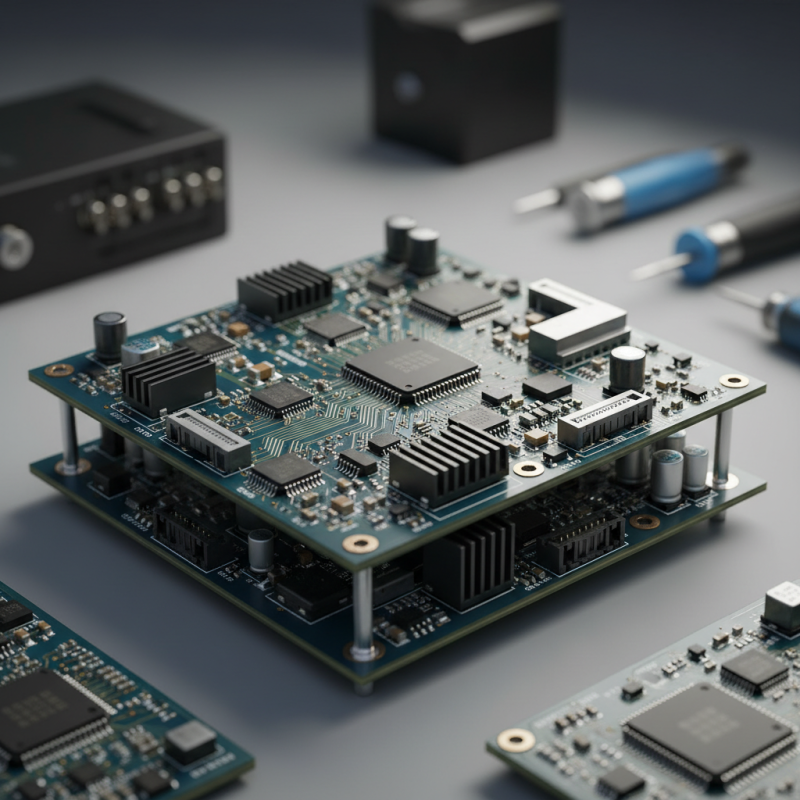
In the world of circuit board design, understanding fundamental principles is crucial. A well-designed circuit board is not just about functionality. It also ensures reliability and manufacturability. According to recent industry reports, up to 80% of electronic failures stem from design flaws. This statistic emphasizes the need for careful planning.
One essential aspect is layout optimization. Designers must consider component placement to minimize interference. Tight spacing can lead to signal integrity issues. Furthermore, routing traces should maintain appropriate width and spacing to handle current flow. A study indicated that improper trace width leads to overheating in 25% of cases. Thorough analysis of thermal performance is critical.
Designers often overlook prototyping. Rushing through the process can introduce errors. Iterative testing is vital for identifying flaws early. Simulation tools can help, yet they are not foolproof. A survey found that nearly 30% of engineers find discrepancies between simulations and real-world performance. Continuous learning and adaptation are key. Engaging in regular reviews of design choices can pave the way for smarter decisions in future projects.

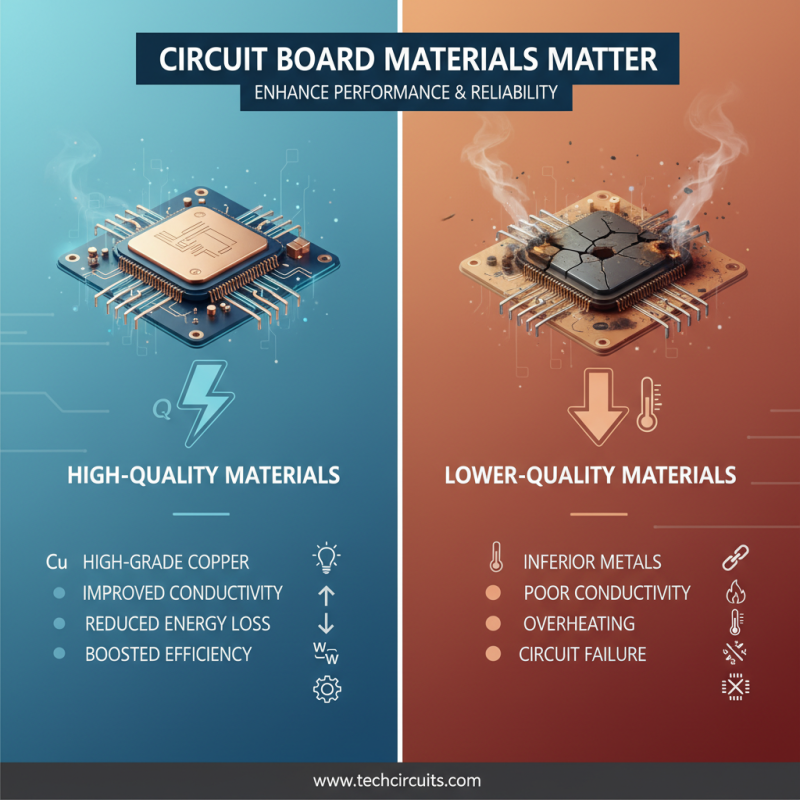
When designing a circuit board, selecting the right materials is crucial. Quality materials can significantly enhance circuit performance. For example, using high-grade copper can improve conductivity. This choice can reduce energy loss and boost efficiency. On the other hand, lower-quality materials may lead to overheating and failure.
Tip one: Consider the thermal properties of materials. Materials like FR-4 are popular for their balance of cost and performance but can struggle with heat dissipation. Occasionally, you might need to explore alternatives. Improving thermal management can prevent failures and extend the lifespan of the circuit.
Tip two: Look out for dielectric materials. Choosing the wrong dielectric can affect signal integrity. A simple mistake here may cause unexpected issues in high-frequency applications. Keeping an eye on dielectric constant is essential. It influences capacitance and overall circuit behavior significantly. Taking these factors into account can lead to better design choices. Don't overlook the importance of your material selections. They are pivotal in ensuring the reliability and effectiveness of your circuit board.
When designing circuit boards, signal integrity and low noise interference are paramount. A well-executed design can increase performance and reliability. According to recent industry reports, up to 70% of electronic failures are linked to poor signal integrity. Thus, engineers must prioritize these factors.
One critical tip is to keep trace lengths short. Longer traces increase inductance and can cause delays in signal transmission. Use ground planes to reduce noise coupling between traces. Additionally, differential signaling can greatly enhance noise immunity. This technique minimizes electromagnetic interference and emphasizes the desired signal.
Another important factor is component placement. Avoid placing sensitive components near noisy ones. Consider using decoupling capacitors to stabilize power supply variations. Each component layout should reflect the system's strategy for noise reduction. Poorly designed layouts lead to unpredictable performance. Testing your design under real-world conditions can uncover hidden issues. Observational analysis often reveals that initial designs fall short of performance expectations. Each design iteration is an opportunity for betterment.
| Tip Number | Tip Description | Impact on Signal Integrity | Noise Interference Reduction |
|---|---|---|---|
| 1 | Define a clear ground plane | Reduces ground bounce | Minimizes common-mode noise |
| 2 | Use controlled impedance for traces | Maintains signal integrity | Reduces reflections |
| 3 | Keep trace lengths short | Reduces latency and distortion | Lowers interference potential |
| 4 | Implement proper spacing between traces | Improves signal clarity | Reduces crosstalk |
| 5 | Decouple power and ground planes | Enhances stability | Minimizes noise coupling |
| 6 | Use vias strategically | Maintains robust connection | Reduces routing space issues |
| 7 | Select appropriate materials | Ensures durability and performance | Affects heat and noise dissipation |
| 8 | Test for thermal management | Protects sensitive components | Prevents noise due to overheating |
| 9 | Ensure proper shielding | Encourages clean signals | Minimizes external interference |
| 10 | Run simulations before production | Identifies potential design flaws | Can preemptively address noise issues |
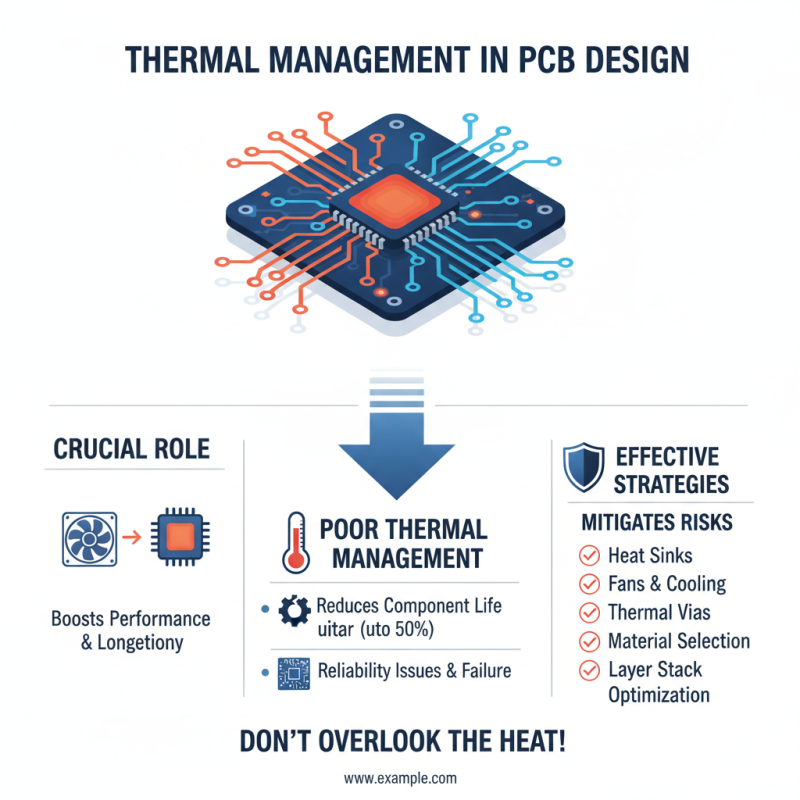
In circuit board design, thermal management is often overlooked, yet it plays a crucial role in the performance and longevity of electronic devices. Studies indicate that poor thermal management can reduce component life by up to 50%. Heat can affect reliability and lead to failure. Implementing effective thermal strategies can mitigate these risks significantly.
One effective tip is to use thermal vias. These can transfer heat from components to the inner layers of the board, distributing it more evenly. It’s also essential to consider the layout. Positioning heat-sensitive components away from high-temperature areas can help manage thermal peaks. Don't forget about airflow. Active cooling methods, such as fans, can provide relief but need to be carefully integrated into the design to avoid introducing noise.
Thermal simulation tools should become part of the design process. They can identify hotspots early, allowing for better decision-making. Ignoring thermal testing can lead to costly revisions later. The best designs balance functionality with thermal efficiency, which requires constant iterative feedback. A data report from IPC highlights that up to 30% of design failures occur due to thermal issues. Therefore, prioritizing thermal management can save both time and resources.
Testing and prototyping circuit boards is crucial in the design process. It helps identify issues early. You need to create a prototype to test your design. This allows for hands-on evaluation of components and layout. Sometimes, unexpected issues arise in the prototyping phase. Components may not fit as expected, or connections might be unreliable. This highlights the importance of iterative testing.
Incorporating different testing methods is vital. Simulations can reveal potential problems before physical testing. However, simulations are not always accurate. Real-world testing can uncover issues missed in simulations. Consider using different voltage levels during testing. This can help identify weaknesses in your design. Document the results meticulously. Reflection on these findings can lead to valuable adjustments. Avoid assuming your first prototype will be perfect. Embrace the learning process; it's part of effective circuit board design.