How to Choose the Right Printed Circuit Board Supplier
Choosing the right printed circuit board supplier can determine whether a product reaches the market smoothly or returns to the lab.
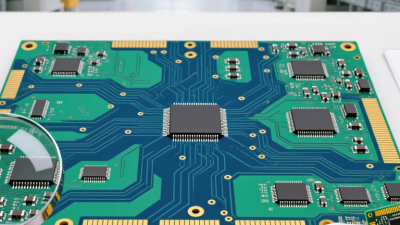
A dependable supplier offers more than attractive pricing. Their capabilities should match your board’s actual demands, including layer count, material selection, impedance control, surface finish, and production volume. Ask for measurable evidence. Review certifications, inspection records, sample reports, and process controls. A clean factory floor helps, but documented consistency matters more. Request a sample board before approving a large order. Look closely at solder-mask alignment, drilled holes, edge quality, and copper finish.
As signal-integrity expert Lee Ritchey states, “The only way to control impedance is to control the geometry.” This principle reaches beyond design software. Your printed circuit board supplier must control stack-up details, dielectric thickness, copper weight, and fabrication tolerances. Otherwise, a fast signal may behave differently on the production line than it did in simulation.
Communication deserves equal attention. Can the supplier explain a manufacturing problem without hiding behind technical language? Can they respond clearly when Gerber files change late? These moments reveal experience. A supplier that raises concerns early may save weeks of redesign.
The lowest quotation can look clever. Sometimes it is not. Hidden costs may appear through delays, rejected boards, unstable materials, or weak traceability. Still, an expensive supplier is not automatically reliable. Compare evidence, not promises. Choose the partner whose engineering discipline, quality records, and delivery habits fit your product’s risks. That decision may feel slower today, but it often protects both performance and reputation later.

Define Your PCB Requirements and Project Specifications
Defining your PCB requirements is the real starting point for choosing a supplier. A neat specification is not always complete. Record the board’s dimensions, layer count, copper weight, material grade, surface finish, and expected annual volume. State controlled-impedance values, drilling limits, spacing rules, and acceptable tolerances. If the board enters a harsh environment, include temperature, humidity, vibration, and corrosion conditions.
Your design data should also identify assembly needs. List component packages, soldering methods, inspection requirements, test coverage, and packaging conditions. IPC standards can support decisions about fabrication quality and acceptance criteria. The IPC World PCB Production Report identifies automotive, computing, and communications as major demand areas, each with different reliability expectations. That difference matters. A low-cost consumer board should not automatically guide an industrial design.
Cost estimates need evidence, not optimism. Grand View Research valued the global PCB market at approximately USD 89.7 billion in 2023, showing a large and competitive supply base. However, market size does not prove technical suitability. Ask potential suppliers to review your Gerber files, drill files, stack-up, and bill of materials before quotation. Request sample panels and measurable inspection records. A supplier may promise a tight tolerance, yet the drawing may never define how it will be measured. That gap deserves attention. Small omissions matter. Recheck the specification after prototype testing, because real thermal movement or assembly defects may expose assumptions that looked reasonable on paper.
How to Choose the Right Printed Circuit Board Supplier
Define your PCB requirements and project specifications before comparing suppliers.
This example uses a 100-point project evaluation model. Manufacturing capability, quality control,
electrical performance, lead time, cost transparency, and technical documentation should be matched
to the PCB design, production volume, compliance needs, and delivery schedule.
Assess Supplier Capabilities, Technology, and Production Capacity
Choosing a printed circuit board supplier starts with evidence, not polished promises. Ask for recent production examples that match your board’s layer count, materials, and tolerances. A supplier experienced with fine-pitch components may still struggle with heavy copper designs. Request process details, inspection records, and sample cross-sections.
Technology reveals practical capability. Check whether the factory supports controlled impedance, microvias, surface finishes, and automated optical inspection. Ask how engineers manage drill accuracy and solder-mask registration. During a factory review, look for clean storage areas, labeled material racks, and traceable work orders. Small details matter.
Production capacity needs careful testing. Compare stated monthly output with actual equipment, staffing, and maintenance schedules. A supplier may accept your volume but outsource critical steps without clear disclosure. That creates delays and quality risks. Ask for realistic lead times during peak demand, not only ideal timelines. Confirm their backup plans for material shortages and equipment failure.
A pilot order can expose weaknesses early. Measure defect rates, delivery consistency, engineering response, and documentation quality. I once underestimated change-control discipline; the boards were acceptable, but revisions became confusing. That mistake still influences my supplier reviews. Leave room for honest questions. Perfect capacity claims deserve closer examination.
Verify Quality Systems, Certifications, and Testing Procedures
When choosing a printed circuit board supplier, quality evidence matters more than polished sales language. Ask for current quality certificates, their scope, and the issuing body's accreditation. An expired certificate proves very little. Review documented controls for design files, material traceability, process changes, and nonconforming boards. These records show whether procedures guide daily work or simply decorate a website. That distinction is important.
During supplier audits, request sample inspection reports and production travelers from comparable board types. Check whether operators record copper thickness, drilled-hole quality, solderability, and dimensional results. Testing should match the board’s risks. Useful evidence may include electrical continuity, insulation resistance, thermal stress, cleanliness, and microsection analysis. Ask who performs each test, which equipment is used, and how calibration is controlled. Photographs of test fixtures can reveal practical details, such as worn probes or unclear labels. Small details matter.
I have seen suppliers present excellent first articles while later batches lacked complete inspection data. That experience changed my approach: I now compare certificates with actual batch records. Do not accept reports without lot numbers, acceptance criteria, and reviewer approval. Still, paperwork can be incomplete. Ask for corrective-action records and evidence that recurring defects were investigated. A capable supplier explains failures without defensiveness and updates controls afterward. I would also request a trial order before approving full production. It costs time, but it exposes gaps early, before your assembly line stops.
Compare Pricing, Lead Times, Communication, and Support
Price is only the opening comparison when choosing a printed circuit board supplier. Prismark estimated the global PCB market at about $69 billion in 2023, showing how much capacity competes for the same orders. Request identical quotations from three suppliers. Compare tooling, testing, surface finish, shipping, and redesign fees. A low unit price can become expensive when a supplier adds unclear engineering charges. Ask for a written price-validity period, especially for copper, laminate, and freight costs.
Lead time should be measured from approved files to inspected delivery, not from purchase order to shipment. IPC industry research continues to identify material availability and logistics as major manufacturing risks. Ask for recent on-time delivery data, not promises. Communication matters during a failed electrical test or a blocked material lot. Require one technical contact, response-time targets, and documented engineering-change procedures. Support should include DFM feedback, sample inspection reports, and corrective-action records. Good support feels visible.
Be specific.
A practical audit can expose gaps quickly. Send the same Gerber files and fabrication notes to each candidate. Record quotation time, clarification quality, and the number of assumptions made. Then request a small pilot run with agreed acceptance criteria. Even experienced buyers can overlook support after production starts. I have seen fast quotations hide slow approvals; that mistake deserves more attention than another minor price discount.
Evaluate Samples and Select the Most Suitable Supplier
How to Choose the Right Printed Circuit Board Supplier
Evaluate Samples and Select the Most Suitable Supplier
A supplier’s sample reveals more than a sales presentation. Request several boards from the same production batch. Inspect edge quality, solder mask coverage, silkscreen clarity, and surface finish under bright light. Check whether drilled holes are centered and free from rough burrs. Small defects matter. They may indicate weak process control.
Compare the sample with your Gerber files and manufacturing drawings. Measure critical dimensions with calibrated tools. Confirm layer count, copper thickness, hole sizes, and impedance requirements. Ask for inspection records, material certificates, and a clear revision history. A reliable supplier should explain test methods without avoiding technical questions. During one evaluation, I focused heavily on appearance and missed incomplete documentation. That mistake delayed approval.
Test assembly performance, not just board appearance. Place components on several samples and watch for warping, lifted pads, or poor solder wetting. Request a cross-section report for multilayer boards when reliability is important. Review electrical test coverage and traceability from materials to shipment. Communication also deserves a practical test. Send a small design question and measure the response time, accuracy, and willingness to challenge unclear instructions. One sample cannot prove long-term consistency. A second production run may expose problems. Allow time for that check.