
Choosing the right Solids Control Agitator starts with understanding the tank, fluid, and operating conditions. Global buyers often compare designs by motor power alone. That approach can mislead.
A Solids Control Agitator must keep weighted mud suspended without creating excessive shear. It should also reduce dead zones near tank corners, suction lines, and underflow areas. Common options include paddle agitators, propeller agitators, hydrofoil models, axial-flow units, radial-flow units, top-entry systems, side-entry systems, and high-shear designs. Each type produces a different movement pattern inside the tank. The correct choice depends on mud density, viscosity, tank geometry, temperature, and solids loading.
H. William Derrick, a pioneer of solids-control equipment, is often credited with this practical principle: “Good separation begins with good solids preparation.” The statement remains useful for agitator selection. Poor circulation can weaken screening performance, increase settling, and create difficult maintenance conditions. In the field, operators may find thick barite layers beneath a smoothly running motor. It happens.
This guide reviews the top ten Solids Control Agitator types for global buyers. It considers mixing efficiency, power consumption, wear resistance, installation, maintenance access, and supplier support. Product certificates matter, but real performance matters more. Ask for test data, impeller dimensions, shaft materials, seal details, and application references. Do not trust impressive torque numbers without tank-specific evidence. Some specifications look excellent on paper. Actual mud behavior can disagree. That is why experienced buyers should compare engineering data with operating feedback before making a final decision.
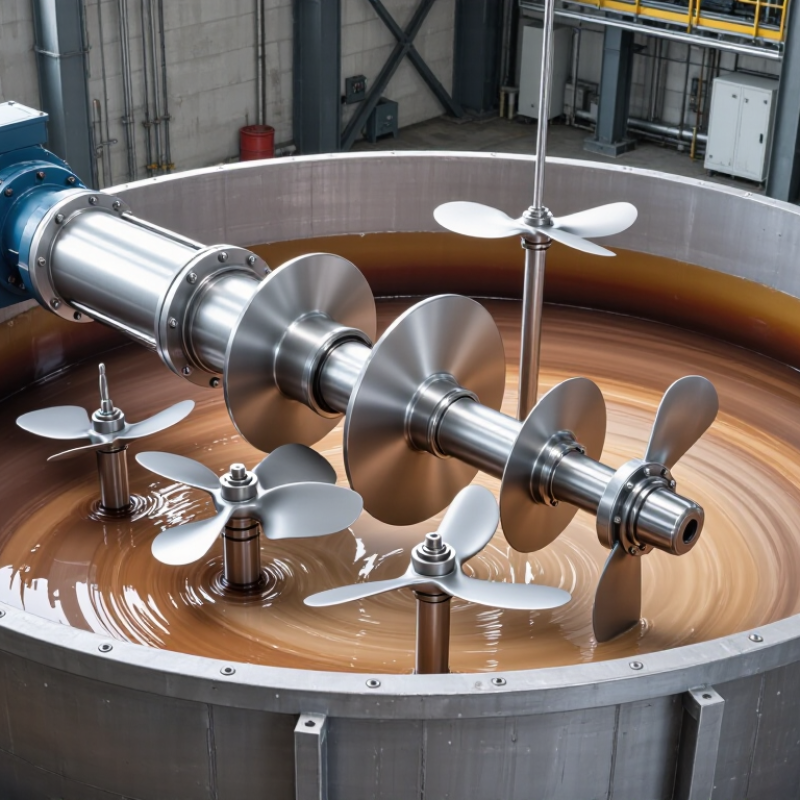
Agitator Fundamentals in Solids Control Systems
Agitators keep barite, drilled solids, and chemical additives suspended inside active mud tanks. Without steady circulation, solids settle in quiet corners and alter mud density readings. The main choices include paddle, pitched-blade turbine, hydrofoil, propeller, anchor, gate, helical-ribbon, radial-flow, axial-flow, and jet-assisted designs. Each type changes shear, circulation pattern, power demand, and maintenance exposure. API Specification 13C emphasizes consistent solids-control performance, but it does not replace field-based equipment selection.
Tank geometry matters greatly. A narrow tank may favor axial-flow circulation, while a deep tank can need stronger lower-zone movement. High-viscosity fluids often require torque rather than extreme speed. The Energy Institute’s 2024 Statistical Review recorded global oil consumption above 100 million barrels per day in 2023. That scale keeps drilling-fluid reliability commercially important. IEA’s Oil 2024 report expects demand to approach 106 million barrels per day by 2030, despite slower growth. Bigger systems are not automatically better.
A practical check starts with viscosity, density, tank volume, solids loading, and operating temperature. Then review impeller diameter, clearance, gearbox torque, and motor service factor. Experienced crews also inspect dead zones after shutdowns. A common mistake is choosing horsepower first. I have seen oversized impellers create unnecessary shear and vibration. That lesson is easy to miss. Field conditions remain messier than design sheets.
Agitator selection depends on drilling-fluid viscosity, solids loading, tank geometry, impeller diameter, and required suspension performance. The chart compares representative industrial tip-speed ranges for common agitator configurations used in solids-control and related mixing systems.
Values show typical engineering ranges in metres per second and are intended for preliminary comparison only. Final operating speed should be calculated from impeller diameter, fluid rheology, power demand, and tank design.
Solids control agitators keep drilling fluid uniform inside tanks and mixing chambers. Paddle agitators use broad blades to create steady, low-shear circulation. Turbine agitators generate stronger radial flow for suspended solids. Propeller agitators move fluid axially and work well in deeper tanks. Hydrofoil agitators use curved blades to deliver high flow with lower power demand. Their operating principle is simple: transfer motor torque into controlled circulation.
Pitched-blade turbines combine axial and radial movement. They handle changing fluid levels better than many basic designs. Radial-flow turbines push fluid outward toward tank walls, improving dispersion near the perimeter. Axial-flow turbines drive fluid downward or upward, reducing dead zones around the shaft. Anchor agitators follow the tank wall and scrape material from surfaces. This matters when mud becomes thick or begins settling. Yet, anchor designs may consume more power than expected.
Helical ribbon agitators create a long, spiral circulation path for highly viscous fluids. Side-entry agitators install through the tank wall and simplify maintenance access. However, their circulation pattern depends heavily on mounting angle and tank geometry. In field inspections, poor baffle placement often causes vortexing and uneven density. That is an easy detail to miss. Buyers should compare viscosity, solids concentration, tank diameter, shaft length, seal duty, and available motor power before selecting an agitator. A technically attractive design can still perform poorly when operating data remains incomplete.
Top 10 Solids Control Agitator Types for Global Buyers
Performance Differences Across Key Agitator Designs
Solids control agitators keep drilling fluids uniform inside tanks and active pits. Their performance depends on viscosity, density, tank geometry, and solids loading. Paddle agitators provide steady bulk movement with moderate power demand. They suit low to medium viscosity fluids. Pitched-blade turbines create stronger axial circulation and improve bottom coverage. Hydrofoil agitators move large fluid volumes efficiently, often with lower shear. Marine propellers offer fast circulation but may struggle with heavy settled solids.
Radial turbines produce stronger local turbulence and disperse additives quickly. Anchor agitators scrape near-wall zones in viscous fluids. Gate designs deliver similar wall coverage with controlled movement. Helical ribbon agitators handle thick, sticky mixtures, although cleaning can take longer. Retreating-blade turbines resist solids buildup and support reliable circulation. Rotor-stator systems create intense shear, but they may consume more energy and accelerate component wear.
During field checks, operators should watch the tank floor, not only the surface. A quiet surface can hide settled barite or cuttings. In one practical setup, changing blade clearance improved circulation without increasing motor size. Baffles also reduced vortexing and wasted power. Results are not always perfect. A hydrofoil may save energy in one tank but perform poorly in a narrow vessel. Temperature changes can alter fluid viscosity within hours. Selection should combine measured torque, mixing time, abrasion exposure, and maintenance access. Steady performance matters more than impressive catalog figures.
Top 10 Solids Control Agitator Types for Global Buyers
Selecting an agitator for mud tanks starts with fluid behavior, not motor size. The main options include paddle, turbine, hydrofoil, axial-flow, radial-flow, bottom-entry, side-entry, top-entry, hydraulic, and pneumatic agitators. Each handles solids differently. Hydrofoil and axial-flow designs usually create stronger vertical circulation with lower shear. Radial-flow units can break surface buildup, but may consume more power.
API RP 13B-1 identifies density, funnel viscosity, rheology, filtration, and sand content as essential drilling-fluid measurements. Use these values before choosing impeller diameter or speed. For example, a high-solids water-based mud may need wide-blade circulation through a tank corner. A weighted oil-based mud may require slower, continuous movement to limit barite settling. Measure tank depth, working volume, baffle layout, and available power. Small details matter.
A 2024 global drilling activity report recorded thousands of active land and offshore rigs, showing why agitator selection must suit different climates and operating practices. Yet published market reports often group all mixing equipment together. That comparison can mislead buyers. Check actual turnover time, settled-bed height, noise, seal life, and maintenance access. Ask for test data using your mud properties, not clear water. Clear water is forgiving. Real mud is not. Experienced operators still sometimes oversize the motor and undersize the impeller. Reconsider the whole mixing pattern.
Top 10 Solids Control Agitator Types for Global Buyers
Global Buyer Criteria for Sizing, Safety, and Maintenance
Selecting a solids control agitator starts with the tank, not the motor. Common options include top-entry, side-entry, bottom-entry, direct-drive, geared, turbine, hydrofoil, pitched-blade, anchor, and high-shear designs. Each type handles different viscosity, solids concentration, and mixing targets. Measure tank diameter, liquid depth, density, temperature, and expected settling time. A small impeller may leave heavy particles beneath the shaft. An oversized unit can waste energy and damage fragile solids. That mistake is more common than many buyers expect.
Sizing should match torque requirements at the lowest operating temperature. Request performance data at realistic solids loading, not clear-water conditions. Check motor service factors, shaft deflection, seal selection, and gearbox duty. Baffles may be necessary to prevent swirling and improve suspension. Variable-speed control helps operators adjust mixing as fluid properties change. However, extra speed does not always produce better suspension. Test results matter.
Safety requirements vary by location, but core controls remain consistent. Specify guards, emergency isolation, grounding, lifting points, and safe access around the drive. For pressurized or hazardous environments, confirm the applicable electrical and mechanical certifications. Maintenance teams need inspection ports, replaceable wear parts, accessible seals, and clear lubrication intervals. Keep critical spares available, especially seals, bearings, and couplings. A practical maintenance plan should include vibration checks and torque inspections. Buyers sometimes focus on purchase price and overlook downtime. That decision deserves another review.
| Agitator Type | Primary Flow Pattern | Typical Tank Application | Typical Power Density | Common Speed Range | Solids-Control Suitability | Key Sizing Criteria | Safety and Maintenance Priorities |
|---|---|---|---|---|---|---|---|
| Axial-Flow Hydrofoil | High-volume axial circulation with relatively low shear | Large active mud tanks, reserve pits, and transfer tanks | 0.25–1.00 kW/m³ | 60–180 rpm | Barite suspension Drilling-fluid uniformity Low-to-medium viscosity | Tank volume, fluid viscosity, solids settling velocity, impeller diameter, and required turnover rate. A common design target is one complete tank turnover every 2–5 minutes. | Use a guarded shaft and coupling, verify minimum liquid level before startup, inspect blade erosion and shaft alignment, and check gearbox oil and seals at scheduled intervals. |
| Pitched-Blade Turbine | Combined axial and radial flow with moderate shear | General-purpose active systems and weighted mud tanks | 0.50–1.50 kW/m³ | 80–240 rpm | Weighted mud Moderate solids loading Versatile mixing | Match blade diameter and pitch to tank diameter, liquid depth, density, yield point, and desired suspension. Multiple impellers may be needed in deep tanks. | Protect against exposed rotating parts, use overload protection, inspect blade fasteners for loosening, and monitor vibration caused by imbalance or solids buildup. |
| Radial-Flow Turbine | Strong radial discharge and higher local turbulence | Compact tanks, chemical-mixing compartments, and high-solids zones | 1.00–3.00 kW/m³ | 120–360 rpm | Higher shear Chemical dispersion Short mixing paths | Size for viscosity, density, gas entrainment risk, and required dispersion rather than only tank volume. Confirm motor torque during startup at maximum mud density. | Use a sealed bearing arrangement where required, control splash and vortex formation, inspect impeller welds, and verify that the motor has adequate service factor. |
| Retreat-Curve Impeller | Axial-to-mixed flow with reduced tendency to wrap fibrous material | Contaminated drilling fluids and tanks with fibrous or stringy debris | 0.50–1.50 kW/m³ | 80–220 rpm | Debris tolerance Moderate viscosity Reduced fouling | Consider the type and concentration of debris, tank geometry, impeller clearance, and the required bottom-sweeping velocity. | Install a lockable access guard, isolate electrical power before cleaning, inspect leading edges for wear, and remove accumulated solids during planned shutdowns. |
| Anchor Impeller | Low-speed wall and bottom sweeping | High-viscosity mud, gelled fluids, and narrow-clearance vessels | 0.50–2.00 kW/m³ | 10–60 rpm | High viscosity Wall scraping Low-speed suspension | Size from viscosity, yield stress, tank diameter, wall clearance, and torque demand. Torque is normally more critical than rpm for high-viscosity fluids. | Provide a high-torque gearbox and reliable overload protection, check clearance to prevent contact, inspect scraper surfaces, and monitor gearbox temperature. |
| Gate or Frame Impeller | Broad low-speed circulation across the tank cross-section | Large rectangular tanks and systems requiring broad bottom coverage | 0.40–1.50 kW/m³ | 10–80 rpm | Large tank coverage High-viscosity fluids Low shear | Evaluate tank length, width, liquid depth, corner geometry, bottom clearance, and torque at cold-start conditions. | Use rigid structural supports, confirm frame concentricity, inspect welds and wear strips, and prevent operation when the liquid level is below the designed submergence. |
| Marine-Propeller Impeller | Efficient axial pumping with low-to-moderate shear | Small or medium tanks, premix compartments, and water-based fluids | 0.25–1.00 kW/m³ | 180–600 rpm | Low-viscosity mud Fast circulation Energy efficiency | Match propeller diameter and pitch to tank diameter, liquid depth, viscosity, and required circulation rate. Avoid excessive speed that can create a deep vortex. | Fit a shaft guard and anti-vortex measures where needed, inspect blades for impact damage, check seal leakage, and confirm correct rotation direction. |
| High-Shear Disperser | Strong localized radial flow and intense shear | Polymer hydration, chemical premixing, and difficult-to-disperse additives | 2.00–8.00 kW/m³ | 600–1,800 rpm | Powder wetting Polymer dispersion High shear | Size for powder addition rate, viscosity, batch volume, dispersion time, temperature rise, and air-entrainment limits. It is usually a process-stage agitator, not a full-tank solids-suspension unit. | Require a fully enclosed guard, interlocked access covers, emergency-stop controls, and strict lockout/tagout procedures. Inspect discs, teeth, bearings, and seals for wear. |
| Dual-Impeller Shaft | Upper axial circulation combined with lower-zone sweeping | Deep tanks and vessels with significant vertical stratification | 0.75–2.50 kW/m³ | 60–240 rpm | Deep tanks Vertical uniformity High solids loading | Determine impeller spacing, shaft length, critical speed, tank aspect ratio, viscosity profile, and motor torque. Check that the lower impeller maintains bottom suspension without overloading the shaft. | Use a dynamically balanced shaft, inspect both impellers during shutdowns, monitor vibration at multiple locations, and provide adequate lifting and handling provisions for the long assembly. |
| Coaxial Dual-Speed Agitator | Independent low-speed bulk circulation and high-speed dispersion | Complex mud systems requiring both suspension and additive preparation | 1.00–4.00 kW/m³ combined | 10–60 rpm / 300–1,500 rpm | Variable viscosity Multi-stage mixing Process flexibility | Size each drive independently for torque, shear, residence time, additive loading, and operating sequence. Confirm that the combined system does not exceed tank heat or power limits. | Use independent guards, interlocks, overload relays, and emergency stops for both drives. Schedule separate inspections for concentric shafts, bearings, seals, gearboxes, and control systems. |
| Buyer reference: Actual agitator selection should be verified against tank dimensions, fluid density, rheology, solids concentration, operating temperature, hazardous-area classification, electrical supply, and local machinery-safety requirements. Power-density figures are typical preliminary-design ranges, not guaranteed operating values. | |||||||