Top Flexible Printed Circuit Manufacturers in China
China’s flexible printed circuit sector supports smartphones, cameras, medical devices, and automotive electronics. Its factories can look similar in a directory. Their capabilities are not.
Grand View Research estimated the global flexible printed circuit board market at USD 18.7 billion in 2023 and projected a 10.1% compound annual growth rate from 2024 to 2030. That forecast signals opportunity, not a guarantee of supplier quality. Dr. Hayao Nakahara, a longtime PCB industry analyst, has described the PCB industry as “a barometer of the electronics industry.” The comparison is useful: demand shifts with product design, production volumes, and technology changes.
This guide examines leading manufacturers in China through practical criteria, including circuit-layer capability, copper thickness, minimum bend radius, impedance control, and quality systems. A glossy sample is not enough. Buyers should ask how a supplier controls tolerances across repeat orders, and whether its process matches the application’s actual bending conditions. Small details matter. A trace that survives a prototype may still fail after repeated flexing. And published capability tables can leave gaps; verify critical specifications directly with the factory. The aim here is not to crown one universal winner, but to help readers compare suppliers with clearer questions and evidence.
What Flexible Printed Circuits Are and How They Are Used
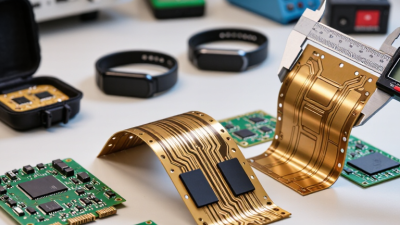
Flexible printed circuits (FPCs) carry electrical signals through thin, bendable boards. Most use copper traces laminated onto a flexible polymer film, often polyimide. Unlike rigid boards, they can fold around a camera module or fit inside a narrow wearable. They bend. They save space.
FPCs connect displays, sensors, batteries, and controls in phones, vehicles, medical devices, and industrial equipment. A short ribbon circuit can replace several wires, reducing weight and simplifying assembly. In a vehicle, it may route signals behind a curved dashboard; in a wearable, it can follow the shape of a wrist. Grand View Research estimated the global flexible printed circuit board market at about US$20.7 billion in 2023 and projected a 10.3% compound annual growth rate from 2024 to 2030. These are market estimates, and report figures can differ with scope.
Flexibility has limits. Repeated bending, sharp creases, heat, and poor strain relief can damage copper traces. Designers need to specify bend radius and test the circuit in its actual assembly, not only on a flat sample. That detail is easy to miss. A flexible board is not automatically more reliable; material choice, connector placement, and manufacturing consistency still matter.
China’s Flexible Printed Circuit Manufacturing Industry
China’s flexible printed circuit (FPC) industry serves products where space, weight, and movement matter. Production ranges from single-layer circuits to multilayer designs with fine traces and stiffeners. Factories commonly use imaging, etching, lamination, drilling, and surface finishing. Small details matter. Copper thickness, bend radius, and coverlay alignment can affect reliability. FPC production is precision work, not merely thin copper.
China’s manufacturing base benefits from established electronics supply chains and varied fabrication capabilities. However, processes differ between facilities. Engineers should review material traceability, inspection records, process controls, and samples made to the actual drawing. A sharply folded test coupon may look fine on day one. Repeated flexing can reveal cracks later. Careful validation helps identify weaknesses before volume production.
For wearable devices, cameras, vehicles, and compact appliances, circuit design must match real operating conditions. Specify whether the circuit flexes continuously or only during assembly, along with temperature range, connector type, and expected service life. Ask how cleanliness, dimensions, and electrical performance are checked. Prototypes may expose an awkward fold or a connector that is difficult to assemble. Revising the design costs time, but can prevent avoidable production problems.
How to Evaluate Flexible Circuit Manufacturers in China
Evaluating flexible circuit manufacturers in China takes more than comparing unit prices. Prismark’s 2024 PCB industry review valued global PCB production at about US$73 billion in 2023, with mainland China accounting for roughly 55%. That scale offers sourcing options, but it does not prove a factory can meet your design’s bend life or tolerance requirements. Ask for the proposed stack-up, copper type, minimum trace spacing, and documented process limits. Specifics matter.
Request test records for the actual material stack, not just a generic capability sheet. IPC-6013 provides qualification and performance requirements for flexible and rigid-flex printed boards; ask how the supplier verifies relevant criteria, including continuity and insulation resistance. For dynamic-flex designs, confirm the bend radius and cycle-test method, then compare results against your use conditions. A sample that survives one bend proves little. Review defect trends, lot traceability, corrective-action records, and change control. Where possible, inspect a first article and a small pilot lot before production. I would not over-trust a polished factory tour. It can be useful, but the paperwork and repeatability deserve closer attention. Ask who owns tooling, how revisions are controlled, and whether reported yields reflect your product type. Even strong suppliers may have gaps; a clear, testable response is more useful than a perfect sales promise.
Profiles of Leading Flexible Printed Circuit Manufacturers
Chinese flexible printed circuit manufacturers differ less by brochure claims than by process control. Strong suppliers can show stable line widths, clean copper edges, and consistent coverlay alignment under inspection. Some specialize in high-volume, single- and double-sided circuits for consumer devices. Others handle multilayer designs, stiffeners, and fine-pitch assembly for automotive or medical equipment. Those capabilities require different equipment and quality records.
Prismark’s 2024 analysis estimated the global printed circuit board market at about US$73.4 billion, across all board types. It is not an FPC-only figure, but it signals the scale of demand facing manufacturers. A useful supplier profile should therefore examine more than factory size. Check whether the producer controls etching, lamination, drilling, and electrical testing in-house. Ask for documented yield data, traceability practices, and examples of handling tight bend radii. The details matter.
Some Chinese manufacturers stand out for rapid prototyping and flexible production, while larger facilities may offer stronger capacity for repeat orders. Neither profile is automatically better. A supplier’s published tolerances can look impressive, yet real performance depends on material selection and process discipline. That is easy to overlook. Buyers should compare sample results with production records, and verify how defects are measured. Public profiles rarely reveal every limitation; even a capable factory may need extra time for unusual stack-ups or tooling changes.
Manufacturing Technologies and Industry Trends
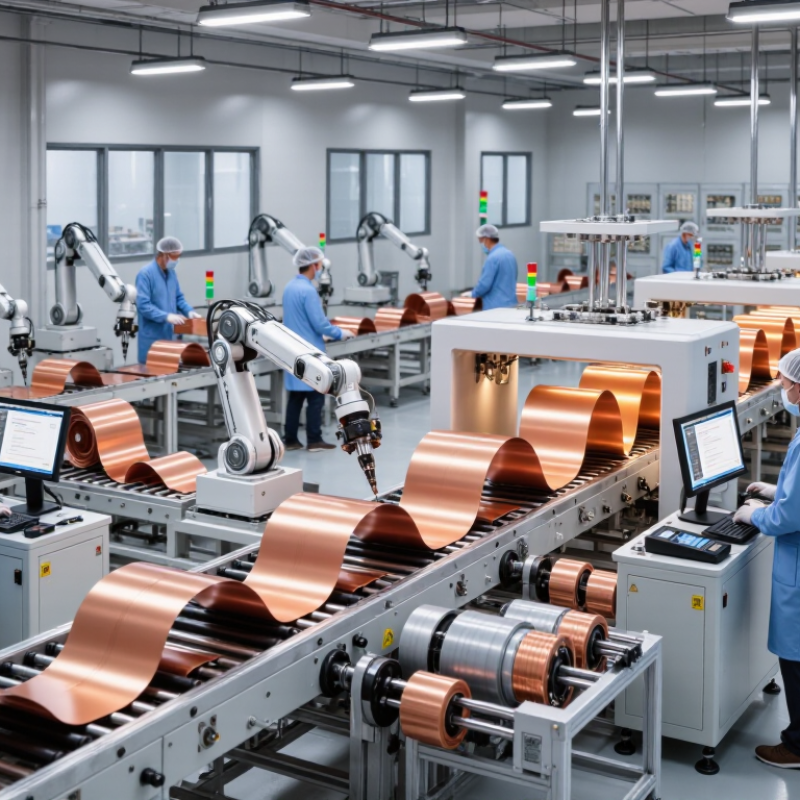
China’s flexible printed circuit manufacturers are investing in finer circuit patterns, automated inspection, and more consistent lamination. These improvements help produce compact circuits for cameras, wearables, and vehicle displays. A typical process may combine copper-clad films, laser drilling, precision etching, and protective coverlay. Small alignment errors can still affect yield. That matters.
Manufacturing trends also reflect demand for thinner, lighter, and more reliable assemblies. Some factories use machine vision to spot trace defects before final testing. Others refine roll-to-roll processing for higher-volume production. Flexible circuits with rigid sections are gaining attention where components need stable mounting points. Yet newer equipment alone does not guarantee quality; material control, process records, and skilled operators remain essential. A useful supplier discussion should cover bend radius, layer count, copper thickness, and operating temperature. Specifications are easy to overlook.
Tips: Share a sample drawing and describe how the circuit will bend in use. Ask how impedance, adhesion, and electrical continuity are checked. Request a first-article sample before scaling up. Keep it measurable. If a design changes late, review tooling and test plans again. Small revisions can cause real delays.
Flexible Circuit Manufacturing: Common Copper Foil Thicknesses
Nominal copper foil thicknesses commonly used in flexible printed circuit fabrication.
Thinner copper can support tighter routing and improved flexibility, while thicker copper can carry more current. The appropriate foil depends on the circuit’s electrical and mechanical requirements.