Why Choose Flexible PCB for Global Buyers?

Global buyers increasingly choose flexible pcb when products must bend, fold, or fit inside limited spaces. From wearable monitors to compact industrial sensors, this technology can reduce wiring, connectors, and assembly weight. It also supports cleaner product layouts. That matters.

In practical sourcing projects, engineers often examine bend radius, copper thickness, layer count, and surface finish before discussing price. A reliable supplier should provide controlled impedance data, material certificates, electrical test records, and traceable inspection results. These details help buyers compare factories across different regions. They also reveal process discipline, which glossy samples cannot always prove.

Flexible pcb can improve durability by reducing solder joints and mechanical stress points. However, it is not automatically the best choice. Repeated dynamic bending requires different materials and validation than a one-time folded installation. Poor handling can create creases, cracked copper, or alignment problems. No material is perfect.

Experienced buyers should request prototype evidence, bend-cycle testing, dimensional reports, and clear communication about production limits. Standards such as IPC guidance may support evaluation, but supplier capability still needs independent verification. A low quotation can become expensive after redesigns, delays, or failed assemblies. We have seen specifications change late, even when early discussions seemed complete. That risk deserves attention.

The strongest purchasing decision balances engineering performance, manufacturing consistency, total cost, and long-term support. Flexible pcb offers meaningful advantages for global products, but only when design rules and quality controls work together. Careful questions create better outcomes.
Why Choose Flexible PCB for Global Buyers?

What Is a Flexible PCB and How Does It Work?

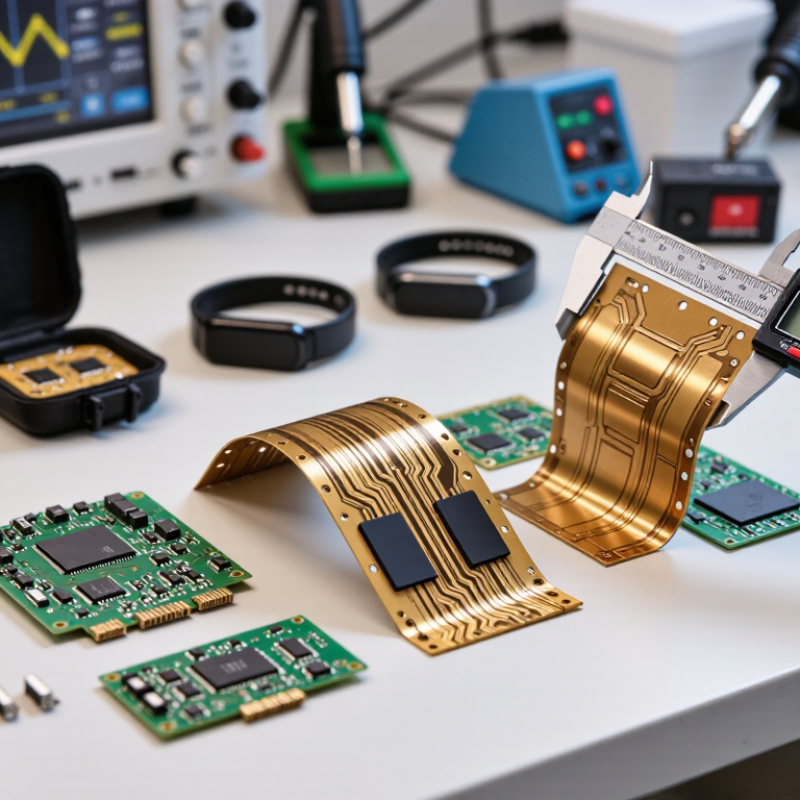
A flexible PCB is a thin circuit board built on a bendable polymer film. Copper traces carry power and signals across that film. Protective cover layers insulate the traces and limit moisture, dust, and abrasion. Unlike rigid boards, it can fold, curve, or move inside a compact assembly. That physical freedom is its main advantage.

During operation, current follows copper paths between components, connectors, and sensors. Bends must follow a specified radius, because sharp folds can damage copper over time. Designers may add stiffeners near connectors to prevent tearing during insertion. Small openings, alignment holes, and exposed contact pads also guide assembly. These details look minor. They are not. Heat, vibration, and repeated movement can reveal weaknesses that simulations miss. Testing remains essential.

Global buyers often choose flexible PCBs when space, weight, and cable routing affect product performance. A medical monitor, camera module, or vehicle control unit may gain cleaner internal connections. Fewer separate wires can reduce assembly steps and possible failure points. However, flexibility does not mean unlimited bending. Material selection, copper type, layer count, and bending cycles require careful review. A design can pass a sample test and still need more evaluation. I would not treat a low quoted price as proof of value. Reliable purchasing checks drawings, test records, tolerances, and traceability before volume production.


Which Design Benefits Make Flexible PCBs Stand Out?

Flexible PCBs stand out because their geometry follows the product, not the other way around. A circuit can bend around a camera module, fold beneath a display, or pass through a narrow hinge. This reduces connectors, solder joints, and assembly space. It also supports lighter devices.

$41.4 billion → $74.3 billion MarketsandMarkets projects the flexible electronics market to grow from about $41.4 billion in 2024 to $74.3 billion by 2029, reflecting strong demand for adaptable designs.

Design freedom is practical, not decorative. A flexible circuit can replace several rigid boards and cables in compact equipment. Fewer interconnections can reduce potential failure points. IPC-2223C provides design guidance for flexible and rigid-flex boards, including bend regions, material selection, and mechanical stress.

Engineers still need to calculate bend radius carefully. Sharp folds can damage copper traces.

The material also absorbs movement better than rigid laminates. That matters inside wearables, vehicle displays, medical instruments, and handheld devices. A thin polyimide layer can tolerate repeated motion when the stack-up is engineered correctly.

However, flexibility is not unlimited. Thermal expansion, adhesive fatigue, and poor routing can create hidden problems. I have seen designs that looked elegant on screen but failed after repeated bending. Laboratory data helps, yet real-world handling remains imperfect.

How Do Flexible PCBs Support Global Manufacturing Needs?

How Do Flexible PCBs Support Global Manufacturing Needs?

Flexible PCBs help manufacturers manage different products, facilities, and shipping routes. Their bendable polyimide structure fits tight spaces, reducing connectors, wiring, and assembly steps. That matters when a design moves between factories with different equipment. Fewer parts can also simplify purchasing and quality checks.

A 2024 assessment by Grand View Research estimates that the global flexible printed circuit board market will grow at over 10% annually through 2030. The report links growth to compact electronics, automotive systems, and wearable devices. In practical production, flexible circuits can reduce package weight and support three-dimensional layouts. A cable that folds around a hinge may replace several rigid boards and wires.

IPC industry data consistently identifies material availability, regional capacity, and supply-chain visibility as major electronics manufacturing concerns. Flexible PCBs support resilience when suppliers qualify equivalent materials and document controlled process changes. Traceability matters. Lot codes, impedance records, bend tests, and cross-section inspections help teams compare output across countries. Yet flexibility is not magic. Repeated bending, sharp folds, and poor assembly fixtures can still cause failures. Some designs need more copper, thicker coverlay, or a larger bend radius than early prototypes suggest. That lesson is easy to overlook, especially when a sample works perfectly.

What Factors Should Buyers Consider Before Choosing One?

Why Choose Flexible PCB for Global Buyers?

What Factors Should Buyers Consider Before Choosing One?

A flexible PCB can save space inside compact devices and reduce the need for multiple wired connections. Its value appears when the circuit must fold, twist, or move repeatedly. Before choosing one, buyers should define the real bending pattern. A board that bends once may need different materials from one that moves daily. Measure the bend radius, folding direction, cycle count, and available installation space.

Material selection deserves careful attention. Polyimide is common for high-temperature applications, but thickness and copper type also affect durability. Thin copper improves flexibility, while thicker copper may support higher current. That trade-off is easy to underestimate. I have seen early designs fail because engineers measured the final shape but ignored assembly stress. Ask for controlled impedance data when the circuit carries high-speed signals. Confirm insulation, shielding, adhesive, and surface-finish requirements before production.

Supplier capability matters as much as the design file. Review prototype quality, dimensional inspection, electrical testing, and process traceability. Request sample bend tests under conditions close to actual use. Check how the supplier manages moisture, packaging, export documents, and regional compliance requirements. Delivery promises can look attractive, yet weak documentation creates delays at customs or during incoming inspection. A written specification prevents misunderstandings between design, purchasing, and manufacturing teams. Leave room for revision. The first version may work, but it may not be the most reliable choice.

How Can Buyers Evaluate Quality, Compliance, and Suppliers?

Global buyers should evaluate flexible PCB quality through evidence, not attractive samples alone. A supplier should provide controlled impedance data, copper thickness records, bending-cycle results, and cross-section images. Ask for evidence. Small details matter.

Check whether the supplier controls material storage, drilling accuracy, coverlay alignment, and solder mask registration. Batch traceability should connect each board to materials, operators, inspection results, and test equipment. Request sample reports from production lots, not only laboratory prototypes. Useful checks include continuity testing, insulation resistance, dimensional inspection, and thermal stress testing. For dynamic applications, define bend radius, flexing cycles, and acceptable resistance change before production. A perfect sample can mislead.

Compliance requires more than a declaration on company letterhead. Buyers should review material declarations, restricted-substance controls, and applicable safety certifications for the target market. Confirm how the supplier manages regulatory updates and engineering changes. Supplier evaluation also needs an on-site or remote process audit, clear corrective-action records, and realistic capacity data. Ask who owns tooling, how defects are reported, and how quickly replacement lots can be produced. Price deserves attention, but an unusually low quote may hide weaker copper, limited inspection, or unstable yields. I would also compare pilot-run results with mass-production promises. That comparison is often uncomfortable, yet it exposes gaps early. Specifications should be written clearly, because vague acceptance criteria create disputes later.

Why Choose Flexible PCB for Global Buyers? – How Can Buyers Evaluate Quality, Compliance, and Suppliers?
Evaluation Dimension Practical Buyer Benchmark Why It Matters for Flexible PCB Recommended Verification Evidence
Flexibility and Bend Performance Use the bend radius defined by the design and material stack-up. As an initial engineering guideline, static bends are often designed around 10× total thickness and dynamic bends around 6× or more, subject to validation. Excessive bending can crack copper conductors, damage coverlay, or reduce the service life of the assembly. Approved stack-up, bend-radius calculation, repeated-bend test results, and application-specific reliability data.
Applicable Industry Standard The design and construction should be evaluated against IPC-2223, while qualification and performance should be reviewed against IPC-6013 and acceptance criteria against IPC-A-600. These standards provide a recognized framework for flexible-circuit design, qualification, and visual acceptance. Supplier capability matrix, inspection criteria, qualification reports, and controlled manufacturing specifications.
Copper and Dielectric Thickness Common rolled-annealed or electrodeposited copper options include approximately 18 μm, 35 μm, and 70 μm. Final selection must match current capacity, bend requirements, and impedance targets. Thickness affects electrical resistance, heat dissipation, flexibility, dimensional stability, and manufacturability. Material certificates, incoming inspection records, cross-section measurements, and approved material lists.
Dimensional and Registration Control Acceptance tolerances should be defined on the drawing according to feature size, layer count, material stack-up, and production capability rather than using one universal tolerance. Accurate registration is essential for fine-pitch components, stiffener alignment, connector fit, and assembly yield. Capability study, first-article inspection report, optical measurement records, and dimensional inspection plan.
Electrical Performance For controlled-impedance designs, a commonly specified engineering target is ±10% of the nominal impedance, unless the end application requires tighter control. Stable impedance supports signal integrity in high-speed, RF, and compact electronic assemblies. Impedance calculation, test coupons, TDR or equivalent test results, and material dielectric data.
Solderability and Assembly Compatibility The surface finish and exposed-pad structure should be qualified for the selected soldering process, component pitch, and expected storage period. Poor solderability can cause opens, insufficient wetting, bridging, or pad damage during assembly. Solderability test records, surface-finish specification, thermal-profile review, and assembly trial results.
RoHS and REACH Compliance For applicable European-market products, materials should meet Directive 2011/65/EU as amended by (EU) 2015/863 and relevant obligations under Regulation (EC) No. 1907/2006. Documented substance compliance reduces regulatory, customs, and product-launch risks in international markets. Supplier declarations, material declarations, restricted-substance test reports, and traceable component or material records.
Flammability and Safety Where required by the end product, the laminate and cover materials should have a documented flammability classification appropriate to the product safety specification, such as UL 94 V-0 when specified. Safety performance is particularly important in power, industrial, medical, transportation, and enclosed electronic applications. Independent material flammability certificates, material datasheets, and product-level safety requirements.
Quality Management System ISO 9001 certification is a useful baseline for general quality management. Automotive projects may require IATF 16949, while other sectors may impose additional system requirements. A documented management system supports process control, corrective action, change management, and consistent production. Valid certificate, certification scope, audit history, nonconformance procedure, and corrective-action records.
Environmental Management ISO 14001 certification can indicate a structured environmental-management system, although certification should not replace product-specific environmental verification. Environmental controls help buyers assess waste handling, chemical management, energy use, and supply-chain sustainability. Valid certificate, environmental objectives, chemical-control procedures, waste records, and audit documentation.
Inspection and Test Coverage A robust control plan commonly includes automated optical inspection, electrical testing, dimensional inspection, solderability checks, and microsection analysis where applicable. Multiple inspection methods detect different defect types, including opens, shorts, registration errors, plating issues, and structural defects. Inspection flow chart, test coverage list, equipment calibration records, sampling plan, and defect classification procedure.
Traceability and Change Control Each production lot should be traceable to materials, process parameters, inspection results, operators or equipment where appropriate, and shipment records. Traceability enables faster root-cause analysis, controlled recalls, and reliable management of engineering changes. Lot codes, traveler records, material batch records, engineering-change notices, and retention-period policy.
Prototype-to-Mass-Production Readiness The supplier should demonstrate a defined transition process from prototype approval to volume production, including design-for-manufacturing review and process validation. A flexible PCB that works in prototypes may still experience yield, registration, or reliability problems at production scale. Pilot-run report, yield trend, process-capability data, production-line equipment list, and ramp-up plan.
Delivery and Supply-Chain Resilience Evaluate confirmed lead time, capacity allocation, material availability, approved secondary sources, packaging controls, and business-continuity planning. Global buyers need predictable supply and protection against material shortages, logistics disruptions, and sudden capacity constraints. Capacity statement, lead-time history, continuity plan, packaging specification, logistics terms, and escalation contacts.
Commercial and Technical Communication A capable supplier should provide clear quotations, complete technical questions, revision-controlled documentation, and measurable responses to quality issues. Fast and accurate communication reduces design ambiguity, quotation errors, revision conflicts, and launch delays. Quotation checklist, technical-review record, response-time metrics, document-control process, and corrective-action reports.