Choosing a PCB fab partner in China is not simply a price comparison. Global buyers need to understand what happens between the first stack-up review and the finished boards arriving at their dock. A supplier’s material options, layer-count range, impedance controls, inspection records, and production capacity all matter. So does the clarity of its engineering communication. Small details count: a via specification, a copper-weight change, or an unclear revision note can delay a build.
IPC president and CEO John W. Mitchell has emphasized the importance of standards, skilled workers, and resilient supply chains in electronics manufacturing. That perspective is useful when evaluating PCB fab manufacturers: a polished quotation is only a starting point. Buyers should verify process controls, certifications, sample reports, and the supplier’s ability to maintain quality as orders scale. Ask who reviews design files, how deviations are reported, and what evidence supports a claimed capability. Check the details.
This guide looks at Chinese manufacturers through practical sourcing criteria, not promotional promises. It considers fabrication capabilities, quality systems, communication, lead times, and support for overseas customers. Even capable factories can make mistakes. That deserves an honest look. A missed revision or vague delivery update can be as revealing as a successful prototype. The goal is not to find a perfect supplier on paper, but to identify a reliable partner whose processes can be checked and whose limits are discussed openly.

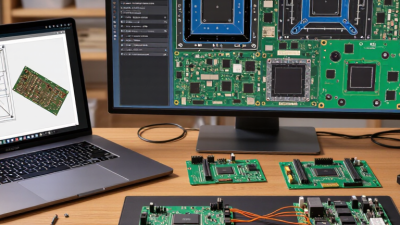
A printed circuit board begins as copper-clad laminate, often made with fiberglass-reinforced epoxy. Fabrication turns design files into a bare board through imaging, etching, drilling, plating, and protective coating. Small alignment errors can affect fine-pitch pads, so inspection and electrical testing matter. The board is not the finished electronic product.
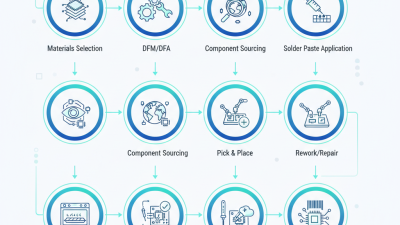
Fabrication and assembly are different steps. Fabrication creates the bare board; assembly mounts components onto it. Buyers should compare layer stack-up, copper thickness, board dimensions, hole sizes, and impedance requirements. Clear drawings help prevent avoidable rework. This detail matters.
China plays a major role in global PCB production, supported by dense supply networks for laminates, tooling, and finishing services. That concentration can help buyers source prototypes and larger production runs. Still, a fast quote can hide assumptions about materials or tolerances. Ask how changes are documented, what tests are performed, and whether production records can be reviewed.
A capable supplier is not defined by capacity alone; communication and consistent process control count, too. International shipping adds another practical concern: packaging, lead time, and the handling of design revisions can affect schedules. There is no perfect checklist, and buyers may discover a gap only after the first sample arrives.

Choosing a Chinese PCB fabricator requires more than comparing quoted prices. Begin with the board’s actual demands: layer count, finished thickness, copper weight, minimum trace and space, controlled impedance, and expected volume. Ask whether quoted tolerances match your drawings, not just a standard capability sheet. Small details matter. A 0.1 mm drill shift can affect connector fit.
Review process controls with evidence. Request recent cross-section images, impedance test records where applicable, and sample inspection reports tied to a similar stack-up. Check how the factory tracks lots, handles nonconforming panels, and documents material substitutions. Certifications can be useful, but verify their current scope and site coverage. Paper isn’t enough.
Assess engineering communication before production. Send a realistic data package and note how questions about stack-up, solder mask clearance, or panelization are resolved. Confirm lead times for the chosen finish, testing, and shipping route. Consider a small pilot order when risk warrants it. Ask about capacity during peak periods, too. A polished audit may still miss a weak handoff between quoting and production. No checklist is perfect; compare written answers with sample boards and delivery records. Some uncertainty remains, and it should be acknowledged.
Leading PCB fabrication manufacturers in China serve buyers through dense supplier networks, mature materials access, and experience with varied board designs. Prismark’s 2024 industry review puts global PCB production value at about US$73.9 billion in 2023, with mainland China accounting for roughly 54.6%. That scale supports broad capacity, but capacity alone does not prove a factory can meet a specific design’s needs. Details matter.
For a practical assessment, buyers can compare layer count, minimum trace and spacing, copper weight, board thickness tolerance, and solder-mask registration. Ask for cross-section samples and process-control records, not only a polished capability sheet. IPC’s manufacturing and acceptance standards provide useful shared criteria for discussing workmanship and inspection. Still, a standard does not replace a customer-specific qualification run. Check how the supplier handles impedance coupons, microsection analysis, and corrective actions when a lot falls outside tolerance. A neat datasheet can hide gaps. I would also verify lead times against the actual stack-up and volume; estimates can shift when materials or testing requirements change. China’s supplier base offers choice, though comparing quotations without aligning specifications can produce a misleading price advantage.
Copper foil weight is commonly expressed in ounces per square foot. The values below use the approximate conversion of 1 oz/ft² to 34.8 μm of copper thickness.
These are nominal foil thickness equivalents. Finished copper thickness can differ after PCB processing, including plating and etching.
Global buyers comparing PCB fabrication partners should look beyond quoted layer counts. Ask whether a factory can hold impedance targets, drill small vias, and control copper thickness across production lots. A six-layer prototype may look excellent, yet repeatability matters more when orders scale. Request sample inspection records, such as automated optical inspection images or plated-hole microsections. Details matter.
Certifications can help assess process discipline, but their scope should be checked. Some facilities maintain quality or environmental management certifications; others may hold automotive or medical-related approvals for specific operations. Confirm the certificate covers the actual production site and product type. A certificate cannot show every weakness. That gap matters. Review audit dates, corrective-action records, and how engineering changes are documented.
Capabilities also need to match the intended application. Industrial control boards may need robust copper and stable performance through temperature changes. Telecom designs can require controlled impedance and dense routing. Automotive and medical-device projects often involve stricter traceability and change control. Ask about inspection methods, electrical testing, and how defects are contained before shipment. A factory’s stated capacity is useful, but recent evidence from comparable builds is more convincing. Even a capable supplier can struggle when specifications are unclear. Keep the drawings precise.
Selecting a Chinese PCB fabrication partner starts with capability, not a low quotation. Prismark’s 2024 industry review estimated global PCB production at about US$73 billion in 2023, reflecting a large and varied supplier base. That figure cannot tell buyers which factory fits their design. Compare layer count, material, copper weight, impedance requirements, board thickness, and expected volume with the supplier’s actual equipment. Numbers matter.
Ask for recent, redacted production records—not only polished presentations. Review process controls for drilling, plating, lamination, and solder mask, then check whether inspection criteria align with relevant IPC-6012 and IPC-A-600 requirements. Request a first-article sample with cross-section images, copper-thickness results, and electrical test records. Confirm that the records identify the same material stack-up and revision as your order. Not just brochures.
A short on-site or remote audit can reveal whether equipment is maintained and operators follow written procedures. Ask how nonconforming boards are quarantined, traced by lot, and reported. Check capacity against your delivery schedule, including holidays and engineering changes. A clean audit file is not proof of daily discipline; repeat orders and corrective-action records offer stronger evidence. I would still treat one successful sample as limited evidence. Use a small pilot run to compare actual yield, packaging, and delivery performance with the supplier’s claims.
| Evaluation Dimension | What to Assess | How to Verify | Why It Matters to Global Buyers |
|---|---|---|---|
| Product and process fit | Confirm that the fabricator’s stated process range covers the project’s board type, layer count, materials, copper weights, finished thickness, and surface finish. | Request a written capability matrix and review it against the actual fabrication notes and stack-up. Ask the supplier to identify any design features that require confirmation before quotation. | Capability limits depend on the specific material, stack-up, and process combination; a general capability statement alone does not establish that a particular design is manufacturable. |
| Quality system | Review the quality-management system, documented inspection controls, nonconformance handling, corrective actions, and change-control procedures. | Check certificate validity, scope, site address, and issuing body directly with the relevant certification body. Request sample inspection records and corrective-action documentation with sensitive information removed. | A management-system certificate indicates a defined quality-management framework; it does not, by itself, prove that a specific PCB lot meets its requirements. |
| PCB acceptance criteria | Establish the applicable drawing, customer requirements, and acceptance criteria for the board. Relevant industry references may include IPC-6012 for qualification and performance of rigid printed boards and IPC-A-600 for printed-board acceptability. | State the required revision and acceptance class in the purchase documents, and confirm that the fabricator’s inspection plan uses the agreed requirements. | Standards and acceptance classes define requirements more clearly than informal terms such as “standard quality.” The customer’s specified requirements should govern the order. |
| Electrical testing | Confirm whether each production panel or board receives the agreed electrical test for opens and shorts, and clarify test coverage and reporting. | Request a sample electrical-test report and confirm how test data is linked to the relevant production lot. For controlled-impedance designs, ask how impedance is measured and recorded. | Electrical testing can identify continuity and short-circuit defects within the test coverage. It does not replace other inspections or demonstrate every aspect of long-term reliability. |
| Controlled impedance | Check that the impedance targets, tolerances, test structures, and measurement method are defined before fabrication. | Review the proposed stack-up and impedance calculations before release. Request the relevant test-coupon results, including the measurement method and results for the production lot. | Impedance depends on factors including geometry, dielectric properties, and stack-up. Verifying the agreed production results is more informative than relying only on a nominal design value. |
| Process inspection and traceability | Assess inspection points for critical processes, the handling of nonconforming product, and the ability to trace materials and production lots. | Ask for a sample certificate of conformity, lot identification method, inspection records, and the supplier’s procedure for investigating a reported defect. | Traceability helps connect delivered boards to production records and supports containment and root-cause investigations when an issue arises. |
| Materials and regulatory documentation | Specify the required laminate and other materials, and identify any applicable substance restrictions or customer compliance requirements. | Request material declarations and supporting documents relevant to the order. Confirm the exact material designation and whether substitutions require written approval. | Declarations and material records help buyers assess compliance against their own requirements; they should be reviewed for scope, product relevance, and validity. |
| Engineering support and DFM | Evaluate whether the supplier reviews fabrication data, stack-up details, tolerances, and potential manufacturing conflicts before production. | Send representative fabrication data and ask for documented questions or proposed changes. Require approval before any change to the released design or manufacturing specification. | Early design-for-manufacturing review can surface issues before production begins and reduce the risk of misunderstandings about tolerances or construction. |
| Sample approval and first production lot | Agree on the prototype or first-article approval process, required inspection evidence, and the criteria for moving to repeat orders. | Compare sample boards and the inspection package with the released fabrication data. Record any approved deviations and confirm how they will be controlled in later lots. | A documented approval process helps ensure that prototype feedback and any authorized changes are reflected consistently in production orders. |
| Capacity and delivery planning | Assess quoted lead time, production capacity for the expected order pattern, holidays, shipping method, and the handling of schedule changes. | Request a dated production schedule with defined milestones. Compare the supplier’s proposed shipping terms and transit assumptions with the buyer’s delivery needs. | Manufacturing lead time and transport time are different. Separating them makes schedule commitments easier to evaluate and manage. |
| Communication and commercial controls | Review response times, technical escalation routes, quotation assumptions, payment terms, and procedures for engineering or order changes. | Use a pilot order or technical review to assess communication in practice. Keep the approved data package, quotation assumptions, and change approvals in the purchase record. | Clear documentation reduces ambiguity across time zones and helps prevent unauthorized changes to design, materials, or delivery requirements. |