Choosing the right China circuit board assembly company requires more than comparing unit prices. It demands evidence, technical judgment, and careful supplier verification. IPC’s 2024 Global Electronics Manufacturing Forecast describes electronics manufacturing as a multi-trillion-dollar global industry, with demand shaped by automotive, medical, industrial, and communication technologies. That scale creates opportunity, but also inconsistency.
Small details matter.
A reliable supplier should demonstrate controlled soldering, traceable materials, stable component sourcing, and documented inspection procedures. Ask for process capability data, not attractive photographs. Review certifications, factory capacity, engineering support, and real production references. IPC’s electronics manufacturing standards also highlight the importance of workmanship, process control, and product reliability. These factors often matter more than a low quotation.
John W. Mitchell, IPC’s president and CEO, has described electronics as “the foundation of modern life.” His observation reinforces one practical point: assembly quality affects products people depend on every day. A strong circuit board assembly partner should therefore explain how it manages inspection, rework, testing, and delivery risks. It should also communicate clearly when a design needs improvement.
No supplier is perfect.
A factory may hold ISO 9001 certification yet still struggle with engineering response times. Another may offer advanced equipment but lack experience with your product category. The best decision combines audited evidence, technical conversations, pilot builds, and honest reflection. Reports from IPC and Deloitte suggest that supply-chain resilience and manufacturing visibility remain major business priorities. This guide examines how to evaluate Chinese suppliers against those realities, without treating price as the only measure of value.

How to Choose the Best China Circuit Board Assembly Company?
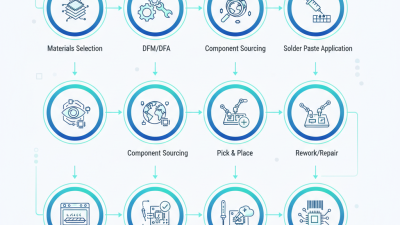
A capable China circuit board assembly company provides more than soldering services. It turns design files into tested electronic assemblies. Engineers review schematics, layouts, and component lists before production begins. They check pad sizes, spacing, thermal areas, and assembly risks. This design-for-manufacturing review can prevent costly board revisions later. Small details matter.
Production support may include prototype assembly, surface-mount technology, through-hole assembly, and cable integration. Technicians place components with automated equipment, then inspect solder joints using automated optical inspection. X-ray inspection can reveal hidden defects under fine-pitch packages. Functional testing adds another layer of confidence. A reliable company also records lot numbers, inspection results, and operator information for traceability.
Customers should ask how the factory handles component shortages and substitutions. A low quotation may hide weak inspection or unclear sourcing. Request sample reports, process photos, and realistic delivery schedules. I have found that clear communication often matters as much as equipment. Still, no factory is perfect. Even a careful process can miss an unusual defect, so test coverage should match the product’s real operating conditions. Packaging, moisture control, and shipping protection also deserve attention, especially when boards contain delicate connectors or heavy components.
| Evaluation Dimension | What the Assembly Company Typically Provides | Practical Data or Evidence to Request | Importance When Selecting a Supplier | Priority |
|---|---|---|---|---|
| Engineering and DFM Review | Reviews Gerber files, drill files, pick-and-place data, bills of materials, and assembly drawings before production. | Documented design-review process, sample DFM report, feedback on component spacing, solderability, polarity, and test points. | Identifies manufacturing risks before materials are purchased or boards enter production. | Essential |
| PCB Fabrication Coordination | Coordinates bare-board manufacturing according to the required layer count, material, copper weight, surface finish, and board dimensions. | Controlled fabrication specifications, incoming inspection records, and verification of board revision and material requirements. | Ensures that the bare PCB matches the electrical and mechanical requirements of the assembly. | Essential |
| Component Procurement | Sources electronic components from approved channels and manages shortages, substitutions, excess inventory, and lead-time risks. | Approved-vendor procedure, manufacturer part-number records, date-code policy, certificates of conformity, and counterfeit-risk controls. | Component authenticity and availability directly affect product reliability, schedule, and compliance. | Essential |
| Surface-Mount Technology (SMT) | Places surface-mount components using automated pick-and-place equipment followed by solder-paste printing and reflow soldering. | Equipment list, line capability, supported component package sizes, solder-paste control records, and reflow-profile reports. | Consistent SMT control improves placement accuracy, solder quality, and repeatability across production batches. | Essential |
| Through-Hole Assembly | Installs leaded components using manual soldering, selective soldering, or wave soldering where appropriate. | Process description, soldering work instructions, operator qualification records, and inspection criteria for through-hole joints. | Important for connectors, transformers, large capacitors, and components that require mechanical strength. | Recommended |
| Inspection and Quality Control | Checks solder paste, component placement, solder joints, polarity, workmanship, and final board condition. | AOI availability, X-ray capability for hidden solder joints, inspection plans, defect classification, and corrective-action reports. | Multi-stage inspection helps detect assembly defects before shipment and supports stable quality control. | Essential |
| Electrical and Functional Testing | Provides flying-probe, in-circuit, boundary-scan, programming, or functional testing according to the product design. | Test coverage proposal, fixture quotation, test procedure, yield reports, and records of failed-unit analysis. | Testing verifies electrical performance rather than relying only on visual inspection. | Recommended |
| Programming and Firmware Loading | Loads approved firmware, configuration files, or device-specific data during assembly or final testing. | Version-control procedure, programming records, access controls, and traceability between firmware version and serial number. | Controlled programming reduces configuration errors and supports product traceability. | Recommended |
| Traceability | Links materials, operators, machines, inspection results, test results, and shipment records to a production lot or serial number. | Sample traceability report, lot-code records, barcode process, and retention period for manufacturing data. | Traceability speeds up root-cause analysis, warranty handling, and targeted corrective action. | Essential |
| Quality Management System | Uses documented procedures for purchasing, production, inspection, nonconformance handling, corrective action, and document control. | Current quality certificates, internal-audit process, nonconformance report example, and corrective-action workflow. | A structured quality system makes production results more consistent and auditable. | Essential |
| Prototype and New Product Introduction | Supports small-batch builds, engineering samples, first-article inspection, design feedback, and controlled transition to volume production. | Prototype lead-time range, minimum order policy, first-article report, engineering-change procedure, and pilot-build process. | A controlled prototype process reduces the risk of repeating design or process problems during mass production. | Recommended |
| Production Capacity and Scalability | Provides information about available production lines, shift arrangements, monthly capacity, material handling, and expansion capability. | Capacity plan, bottleneck-management method, utilization assumptions, and contingency plan for demand increases. | The supplier should be able to support both the initial build and expected volume growth. | Recommended |
| Material and Moisture Control | Stores moisture-sensitive devices and solder materials under controlled conditions and manages shelf life where required. | Storage-temperature and humidity records, moisture-sensitive-device handling procedure, and solder-paste expiry controls. | Proper storage reduces risks such as package damage, poor soldering, and inconsistent process results. | Essential |
| Packaging and Export Logistics | Packs completed boards using suitable antistatic and protective materials and prepares shipping documentation. | Packaging specification, ESD protection method, moisture-control method, carton labeling, and export-document checklist. | Appropriate packaging protects assembled boards from electrostatic discharge, impact, and moisture during transport. | Recommended |
| Communication and Project Management | Provides a point of contact for quotations, engineering questions, schedule updates, shortages, quality issues, and change requests. | Response-time expectations, milestone schedule, escalation path, engineering-change approval flow, and reporting frequency. | Clear communication reduces delays caused by incomplete data, unapproved substitutions, or late design changes. | Essential |
| After-Sales and Corrective Action | Handles field issues, replacement requirements, failure analysis, root-cause investigation, and corrective-action implementation. | Return-material procedure, failure-analysis report format, corrective-action timeline, and warranty terms. | Reliable post-production support limits the operational impact of quality issues. | Recommended |
| Total Cost Transparency | Separates assembly charges, tooling or fixture costs, testing costs, component costs, logistics, taxes, and engineering fees where applicable. | Itemized quotation, validity period, material-price assumptions, substitution rules, and payment terms. | A transparent quotation makes suppliers easier to compare and reduces unexpected project costs. | Essential |