Who Are the Top PCB Printing Manufacturers in China?

China is a central hub for printed circuit board production, serving industries from consumer electronics to industrial controls. Yet choosing a supplier is not as simple as comparing factory size or quoted price. Buyers need to know what each manufacturer can produce consistently, at the required volume and specification.

Fortune Business Insights’ Printed Circuit Board Market report estimated the global market at USD 73.46 billion in 2023 and projected USD 76.26 billion for 2024. Those figures describe the worldwide market, not China alone. Still, they show why dependable pcb printing and fabrication capacity matter as products become more compact and technically demanding. The term “printing” can also be misleading: finished boards require coordinated imaging, etching, plating, lamination, drilling, and inspection. Not just speed.

This guide compares leading Chinese manufacturers through practical criteria: board types, layer counts, prototype support, production capacity, quality systems, and communication. A supplier’s advertised capability may not match its routine output. That distinction deserves a closer look. For example, a factory producing standard multilayer boards may not be the right fit for high-density interconnect designs or tightly controlled impedance. Certifications and equipment lists help, but they cannot replace clear specifications, sample evaluation, and direct confirmation of lead times. The comparison ahead aims to help readers identify suitable partners, not declare one universal winner.

Who Are the Top PCB Printing Manufacturers in China?

What PCB Printing Manufacturers Produce

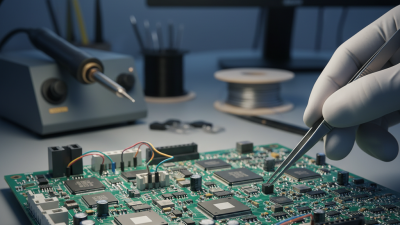
PCB printing manufacturers produce the bare circuit boards that connect electronic components. The word “printing” can be misleading. These boards are built through processes such as copper patterning, drilling, lamination, and solder-mask application. A typical board may use a fiberglass base, copper layers, and a colored protective coating. Small white markings identify component locations and polarity.

The finished product can be a simple single-layer board or a complex multilayer design. Manufacturers make prototypes for early testing and larger production runs for established designs. They may also provide flexible circuits, rigid-flex boards, or boards with metal cores for heat control. Hole size, copper thickness, layer alignment, and surface finish all affect performance. Tiny details matter.

Production checks can include electrical continuity tests, visual inspection, and measurements of board dimensions. These steps help catch open circuits, short connections, or drilling errors before shipment. Some facilities offer component assembly, but bare-board fabrication and assembly are different services. Buyers should confirm what the quoted product includes. The term alone is not enough. One detail is easy to miss: a board that passes inspection may still need testing in its finished device, where real operating conditions can reveal problems.

China’s PCB Manufacturing Industry and Its Main Segments

China’s PCB manufacturing industry is not one uniform market. It spans high-volume rigid boards for everyday electronics, flexible circuits that bend inside compact devices, and rigid-flex designs that combine both. These segments differ in materials, tooling, and inspection needs. A thin flexible circuit, for example, needs careful handling to avoid creases near copper traces.

There is more. High-density interconnect boards use finer lines and closely spaced vias, supporting compact products with many connections. High-frequency boards serve applications where signal loss and material consistency matter. Prototype-focused factories handle short runs and engineering feedback, while larger plants are designed for repeatable production. The boundaries are not always neat. One manufacturer may serve several segments, yet its capabilities can vary by layer count, board size, and tolerance.

When evaluating a supplier, ask how it controls drilling, plating, lamination, and inspection for the specific design. Request traceable test records and clarify the relevant acceptance criteria. Look closely. A polished sample alone does not prove stable production. The best fit is the factory whose processes match the board’s complexity, delivery needs, and reliability demands—not simply the one with the broadest product list.

Criteria for Identifying Leading PCB Manufacturers

Leading PCB manufacturers are not identified by low quotations alone. A useful assessment begins with the board’s actual demands: layer count, copper thickness, minimum trace width, and via structure. Ask for sample inspection records and process capability data matching those specifications. Numbers matter. A polished factory tour does not prove consistent production.

Prismark’s 2024 industry review estimated global PCB production value at $69.5 billion in 2023, down 15% year on year. It also forecast a 5.8% rebound for 2024. Such swings make capacity and delivery evidence worth checking, not merely promises. Compare quoted lead times with recent on-time delivery records, and ask how shortages or design changes are handled. A low quote can look persuasive, until a delayed prototype disrupts the schedule.

Quality evidence should include documented inspection, electrical testing, traceability, and corrective-action records. For rigid boards, IPC-6012 defines qualification and performance requirements; IPC-A-600 provides visual acceptability criteria. Confirm which revisions and acceptance classes apply to your order. Also review how the manufacturer supports design-for-manufacturing questions, especially around tight spacing and thermal management. This check can be imperfect: one successful sample cannot establish long-term consistency. Look for repeat-lot results, clear defect reporting, and answers that match the records.

Who Are the Top PCB Printing Manufacturers in China? - Criteria for Identifying Leading PCB Manufacturers

Evaluation Dimension What to Verify Evidence of a Strong Manufacturer Why It Matters
Quality management Current quality-system certificates, their scope, and whether the production site is covered. Certificates can be independently verified and apply to the facility and manufacturing activities relevant to the order. ISO 9001 is a common quality-management framework. Confirms that documented processes support consistent production and corrective action; certification alone does not guarantee product quality.
Product-specific standards Ability to manufacture and inspect boards to the customer’s specified IPC class and applicable performance requirements. The manufacturer confirms the agreed acceptance criteria, inspection methods, and documentation before production. Different end uses require different reliability and acceptance requirements, so the applicable class should be agreed rather than assumed.
Process and product range Experience with the required board type, such as rigid, flexible, rigid-flex, multilayer, or high-density interconnect (HDI). Documented capability information matches the actual design, materials, layer structure, and production site being considered. A broad product list is not proof that every design is suitable; capability should be confirmed against the specific fabrication data.
Engineering review Design-for-manufacturing (DFM) checks, clarification procedures, and review of fabrication notes and files. Engineers identify manufacturability concerns, explain proposed changes, and obtain approval before implementing them. Early review can reduce avoidable production issues and help ensure the delivered board matches the design intent.
Inspection and testing Inspection plan for the order, including applicable electrical testing, visual inspection, and verification of critical features. Test methods and acceptance criteria are defined, and inspection or test records are available when required by the contract. Appropriate testing helps detect defects, but the test plan should reflect the board design and intended application.
Traceability and corrective action Lot identification, material and process records, nonconformance handling, and corrective-action procedures. The manufacturer can link production records to the relevant order or lot and document how reported issues are investigated. Traceability supports effective investigation and containment if a quality concern arises.
Industry-specific requirements Whether additional management systems or approvals are needed for the application, such as automotive, medical, or environmental requirements. Relevant certificates or customer approvals are current, independently verifiable, and applicable to the site and scope involved. Requirements vary by industry and customer; an unrelated certificate should not be treated as evidence of application-specific qualification.
Delivery performance Quoted lead time, capacity for the requested order, change communication, and historical on-time delivery data where available. Delivery commitments are clearly defined, capacity assumptions are explained, and schedule changes are communicated promptly. Lead time depends on design complexity, materials, quantity, and current production loading; compare like-for-like quotations.
Commercial transparency Quotation detail, tooling or setup charges, material assumptions, shipping terms, and treatment of engineering changes. The quotation identifies major cost and scope assumptions and records agreed revisions. Clear terms make supplier comparisons more meaningful and help prevent misunderstandings during production.
Environmental and regulatory controls Material declarations and applicable substance-compliance documentation requested for the product or market. Documentation is specific to the supplied product or materials and is supported by an appropriate declaration or test record when required. Regulatory obligations depend on product design and destination market; verify the requirements applicable to the finished product.

Use these criteria to compare manufacturers against the same board specification, order quantity, acceptance requirements, and delivery terms. Confirm certificates and capability claims directly with the relevant production site.

Profiles of Leading PCB Manufacturers in China

Profiles of leading PCB manufacturers in China are most useful when they explain what each factory actually builds. Some focus on quick-turn prototypes, while others are better equipped for repeat production or complex multilayer boards. Look for clear information about layer counts, minimum trace widths, copper weights, and available materials. Details matter. A capable supplier should also describe inspection steps, electrical testing, and how it tracks each production lot. Ask for evidence relevant to your board, not just a general capability list.

Tips: Share your stack-up, impedance targets, and expected order volume when requesting a quotation. Confirm whether the quoted process includes testing and documentation. A low price can hide differences in materials, tolerances, or inspection coverage.

Compare manufacturers against your actual design and schedule. Request a sample report or discuss a recent, similar build, while respecting confidential customer information. Check that any stated quality certifications are current and apply to the production site handling your order. Communication is part of the profile, too: note how clearly the team explains design risks and changes. One limitation is easy to miss. A polished capability page cannot prove consistent results, so validate critical details through technical review and a small production run where practical.

How to Compare Manufacturers by Technology and Market Focus

When comparing PCB printing manufacturers in China, look beyond quoted price and production capacity. Match their technology to your board’s actual demands. Ask about layer count, minimum trace spacing, copper weight, and supported materials. For high-speed designs, request impedance-control data and sample test reports. For dense layouts, check experience with microvias and sequential lamination. A precise answer matters more than a broad capability list.

Market focus also shapes a factory’s strengths. A supplier serving consumer electronics may prioritize compact boards and rapid product changes. Industrial applications often require stable materials and consistent batches. Ask for examples of similar board structures, inspection records, and the quality standards relevant to your project. The comparison is rarely neat; a strong prototype result does not automatically prove reliable volume production.

Tips: Send the same fabrication package to each candidate. Compare their questions, tolerance notes, and flagged risks—not just their prices. Confirm how they handle first-article inspection and engineering changes. If an answer sounds vague, ask for measurable evidence.